Showing posts with label book review. Show all posts

Friday, July 17, 2009

Book Review - The World is Flat

(I've had this one in my files for awhile).

In his book, The World is Flat, Thomas Friedman writes in such a way that makes it very interesting to read. Unlike some books on economic issues, The World Is Flat is easy to follow without getting too bogged down in the mire of economic lingo. Unfortunately, this is not necessarily a good thing since Friedman picks and chooses his facts and how he applies his logic. In the book, he admits that he is not an economist and this is evident, even to this non-economist reader. Additionally, he comes off sounding like a broken record, repeating his mantra of “the world is flat, the world is flat” as if praising himself for coming up with such a novel concept.

My first reaction to the book was with the whole concept of flatness. He continually compares himself with Columbus, who set out to prove the world is round, except Friedman comes to the conclusion that indeed it is flat and this flatness is due to globalization mainly through the benefits gained by the creation of the Internet. However, Friedman seems to be mixing metaphors and doing a horrible job of it. Yes, you could say that there might now be more of a “level playing field” in that countries such as India and China now have a greater opportunity to take on parts of the service industry. Yes, you could say that the world is getting smaller due to the ease and swiftness of communication and travel. And if Friedman meant these metaphors, then it makes more sense. But I was left wondering “What in the world has gotten flatter?” Even after Friedman discusses his 10 Flatteners, the metaphor still wasn’t clearly defined.

The other misgiving I had with this book is that Friedman, in his overzealous attempt to push the “fact” of globalization, makes it sound like all our jobs will be done by Indian or Chinese workers next week, so we’d better get busy in improving ourselves. Friedman does indeed have a point that the U.S., along with every other nation, should constantly be striving to educate better workers. But example after example is given of how this Indian company or that Chinese corporation has taken on so much of some particular aspect of an industry that you have to wonder if any Americans are left in the industry and when they’ll be laid off in order to offshore the work to India. Never mind the fact that while there is certainly some level of globalization, it isn’t nearly the amount that Friedman would like us to think.

Personally, I’m all for globalization and the competition it creates among nations and industries. However, I would certainly not point anyone to this book to learn the merits of it. I’m sure there are far more useful books than one that repeats the same nonsense over and over again. At least, I sure hope so.

Friday, July 10, 2009

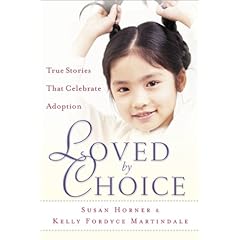
Book Review - Loved By Choice

When an individual or couple chooses to embark on the journey of adoption, whether as birthparents or adoptive parents, the plethora of books on the subject can often be overwhelming. Most books deal with what to expect in the legal process, special considerations that some families or their children may experience or psychological analyses of adopted children. Although the literature choices are many, there are few books that approach the delicate subject of adoption from the perspective of virtually everyone involved. Loved By Choice does just that in a heartwarming and moving way with true stories contributed by birthmothers, siblings, adoptive parents, grandparents and individuals who were themselves adopted as children.

Packed with emotion, each story communicates a part of the adoption story. It’s the anguish a mother feels in choosing adoption for her little one. It’s the ecstasy of new parents receiving into their arms their daughter for the first time. It’s the grandparents struggling to come to terms with their daughter being pregnant, but join in support as their granddaughter is taken away, sometimes forever. It’s in the mystery surrounding the unknown past of an adult who was adopted as a child and searching for answers.

Through all the stories, the incredibly hard journey is chronicled through so many different lenses that you can’t help but wonder at the strength each person displays. But with each story, the marvel of the journey is presented with celebration and the fact that each child was loved.

As an adoptive parent of three beautiful children, each of their stories could very well have been one in this book. My oldest is always asking us to tell him the story of how he came to be our little boy and always likes the part about how he laughed and laughed during the very turbulent flight home. My hope is that just as the stories in this book celebrate adoption, so too my children will celebrate their story of adoption.

Friday, July 3, 2009

Book Review - Finding an Unseen God

Truth is dead.
God never lived.
Life is filled with pain.
Death is the end of life.

Whenever we as Christians hear these statements, immediately our defenses go up and we are ready to defend our faith against whatever else an atheistic, agnostic, or spiritually relativistic person can throw at us. We often forget the humanity of the person making these statements in our attempts to defend and go on the offensive against these principles. We simply switch into debate mode and steam headlong into our desire to win the argument at all costs.

Finding an Unseen God is part autobiography and part philosophical apologetics for the Christian faith as seen from the perspective of a former atheist. The above axioms guided author Alicia Britt Chole’s world until one day, unexpectedly, her world was broken into by a Person who had doggedly pursued after her for her entire life. She chronicles her journey into and subsequently her sudden departure out of the world of atheism. The chapters alternate between her story and her helpful, compassionate insights into the mind of an atheist. It is this compassionate, full-of-grace style that permeates the book while refusing to argue for the sake of argument. Her points come across simply yet profoundly and full of wisdom. In noting the tendency for both sides of the argument to become heated over the elusiveness or non-elusiveness of truth, she offers and expands on four filters for any belief system to be tested by:

• Is my belief system consistent (at its core)?
• Is my belief system livable (and not just quotable)?
• Is my belief system sustainable (through life-size pain)?
• Is my belief system transferable (to others)?

Although at first it seems that the manner in which the short, bite-sized chapters are presented is confusing, the disjointed writing style becomes welcoming as she flits back and forth between childhood and adulthood, one thread detailing her life before Christianity, the other thread discussing the philosophical whys and wherefores of belief. For example, when talking about her dad and his non-religious views, she breaks away to first delve into explaining atheistic thought-processes before returning once more to her dad. In a way, it gives depth to both lines of thought.

She closes with five “things I like about God” and again I was struck by the simple manner in which she writes about a God whose love has affected her life so dramatically. The book ends with a revision of the original belief statements that once again brings our focus to the true and living God who is Truth.

Truth is not dead.
God has always lived.
Life is full of pain.
Death is but a door.
And the God who is, aches to love us.

Friday, June 26, 2009

Book Review - This is Your Brain on Joy

Everyone wants to be joyful, to be happy. What if there was a way to “rewire” your brain to experience all the joy you could possibly handle? What if you learned doctors could, by taking a picture of your brain, tell you exactly what was wrong and how to fix it? Sounds like something you might find in Star Trek, doesn’t it?

According to Dr. Earl Henslin, this is not science fiction, but a medical reality. In his book, This Is Your Brain on Joy, Dr. Henslin discusses the diagnoses that are made possible through a brain imaging technique called SPECT imaging as introduced to him by his friend, Dr. Daniel Amen. Dr. Henslin gives a brief overview of the five main areas of the brain (“Mood Centers”) that control a person’s emotions. With the help of SPECT imaging, he also shows what each area looks like both in a well-balanced brain and in a brain that is not so well-balanced. He provides helpful tips in recognizing problematic symptoms of each Mood Center and gives a list of aids to assist in regaining the proper balance. These aids include eating a proper diet, getting lots of exercise, reading books, listening to music and even watching movies.

On a medical level, this book is rather fascinating in its descriptions of the varying “Mood Centers” of the brain. Using simple terms and nicknames for the more complex medical names, Dr. Henslin describes how each area controls certain moods. He also shows what the brain and subsequent mood would be if each area were damaged or out of balance. The aids at the end of each chapter are very helpful in learning to control or adjust each of the mood centers. Beyond the medical aspects, I found the book lacking in depth. Much of the book comes across as an infomercial for Dr. Amen’s products such as his research, his SPECT scanning technology or the medicinal supplements available through Dr. Amen’s web site and clinic.

For a book supposedly written from a Christian perspective, there seemed very little solid Biblical application in the underlying overall philosophy. One of the points that jumped out at me was found in the following statement: “Only God knows, see, and can judge how many of our errors are due to our free wills and how many are due to our faulty hardwiring. Let me repeat this: only God knows how much of our wrongdoing is the result of pure rebellion or evil intent and how much is cause by brain imbalances” (p.8). The author seems to be suggesting that some of our wrongdoing is simply not our fault, but rather the fault of a scientific imbalance. In other words, it’s out of our control. If we can figure out how to “re-wire” our brains, we will naturally choose good things instead of evil. This theme of using self-medicating remedies to fix our sorrow is repeated throughout the book.

A second concern, and perhaps the most important, is that the pursuit of happiness is seen as the ultimate end, that is, pursuit of happiness for the sake of happiness itself. For instance, on p. 45, Dr. Henslin, in noting that happiness is most often gained in a community setting, quips “It really does take a village to make us happy….It’s no wonder that many consider AA [Alcoholics Anonymous] the world’s largest church. More real church is probably happening in many of these meetings of honest people in rented office spaces than in some of our greatest and most beautiful cathedrals.” If we define “church” as a gathering of people to have a good time and feel happy about ourselves for happiness’ sake or even for community’s sake, than perhaps this might be true. But if church is defined as the visible gathering of the invisible church to worship God and to feed our spiritual bodies with the meat of God’s Word while at the same time fellowshipping with one another, then AA couldn’t be further from any resemblance of real church.

In the last chapter, Henslin attempts to bring Scripture back into the picture, but once again misses the mark. Henslin says, “Toward the end of this heartfelt thank-you [Paul’s epistle to the Philippians], the aging apostle wrote, ‘I have learned the secret…’ The secret to what? Inquiring minds want to know. ‘The secret,’ Paul writes, ‘of being content’ (4:12).” From this point, Henslin launches into his arguments for why being content helps us to be happier and he almost gets it right. Unfortunately, he takes Paul’s letter and almost completely ignores the gospel presented there, focusing only on how we can make ourselves be happier. Instead of the gospel being the foundation for our joy, it is viewed simply as a tool to help us along in achieving personal joy.

This is Your Brain on Joy is a good book for discovering a small part of the medical side of the brain’s operations and how we can influence our own moods. But aside from this and the suggestions for improving your mood (which, quite honestly, can probably be found in almost any self-help book of every sort), the book misses the mark of where our true and lasting joy can be found – in the person and work of Jesus Christ for the sake of the glory of God. 3/5 stars

Friday, June 19, 2009

Book Review - Family Driven Faith

Something is missing in evangelical circles and that something is our children. Statistics show that children raised in evangelical (and I use that term as loosely as the statistical studies do) families are leaving the church at an alarming rate. In his book, Family Driven Faith, Voddie Baucham addresses this issue head on, placing the blame for these departures squarely at the feet of the parents. He begins by bringing the problem into focus by presenting the above mentioned statistics and illustrations from his own experience as a father, pastor and speaker. In today’s society, parents have failed to instruct their children what the Bible teaches, but have instead abdicated this responsibility to the church, the Sunday School, and the youth group.

Basing his book primarily on Deut.6:4-9, Baucham encourages Christian families to accept the responsibility that is theirs in raising children. We shouldn’t be satisfied in teaching our children how to accomplish things in school, sports, society, etc, but rather to instill the faith of the gospel in them through active, purposeful parenting and biblical discipleship. The responsibility of discipleship rests with the parents and should include instruction in such things as maintaining a biblical worldview. As Baucham states, “Teaching our children to think biblically in these five basic areas [our view of God, man, truth, knowledge and ethics] will go a long way toward establishing a foundation for biblical thinking in their lives” (pp.76-77).

While overall the book has many good, insightful things to say, the chapters focusing more on the family unit as a family (as opposed to the family unit as a part of a church) were quite good. The chapter on creating and maintaining a family worship time in the home is especially good and perhaps worth the price of the book by itself. In it, he discusses the need for a family worship time and gives the following seven very practical and sound steps to establishing this worship time (pp.139-142):

  • Family worship must be born of conviction.
  • Family worship begins with the head of the household.
  • Family worship must be scheduled.
  • Family worship must be simple.
  • Family worship must be natural.
  • Family worship must be mandatory.
  • Family worship must be participatory.
He follows these seven steps with seven blessings that are a result of family worship (pp.142-148):

  • Family worship honors God.
  • Family worship will draw your family closer to God.
  • Family worship will draw your family closer to one another.
  • Family worship will lay a foundation for multigenerational faithfulness.
  • Family worship will expose spiritual weaknesses in your home.
  • Family worship will serve as a training ground for smaller children.
  • Family worship will make corporate worship more meaningful.
There were a couple of things I especially appreciated in this chapter. The first was his pointing out that family worship serves as a training ground for little children. It took Sarah and I a little while to realize this. We would be trying to train Jeremiah to sit still in church, but weren’t requiring the same thing when we had our family prayer time. As a result, Sunday mornings were rather difficult to say the least. Once we started training him to sit and listen during our family prayer time, we found that his “sitting still” abilities were improving in church also.

The second thing I appreciated in this chapter was what he said about family worship laying a foundation for faithfulness in future generations. His statement that “Children who grow up in homes that had daily family worship will see it as the norm” (p.144) rung true for me. I can still very distinctly remember our family devotions we had while I was growing up. As each child was able, we would take turns reading the Bible, reading a little Bible story geared towards children, and praying for missionaries. The impact of this family tradition will perhaps never be fully known, but I am forever grateful for my parents teaching me the importance of family devotions.

Beyond this chapter, the author had some good things to say regarding the interactions within the family, the importance of the father leading in the home, and the vast importance of teaching children the Bible. Unfortunately, I found much of the book to be long on illustrations & sage platitudes but short on Biblical explanations or defense. For example, on pages 159-161, he discusses the need for men to prioritize our families, but he fills almost the entire two-page section with his illustration, devoting only one single, small paragraph to basically saying “Don’t sacrifice your family on the altar of prosperity.” He encourages men to ask the tough questions, but doesn’t give guidance as to what those questions are. Much of the book follows this style of being wide in its scope of topic, but quite narrow in defending the author’s stance.

Further, I found much of the book echoing the style of many an evangelist I’ve heard that would use illustration after illustration to back up his point or soapbox issue, but not going into Scripture to defend it. Even when he states, for instance on p.161 regarding the question, “Should Mom work outside of the home?” that we should first “seek to understand what the Bible teaches on the matter,” nowhere in the following 5-page section does he even bring what the Bible says into the equation. The one time he does quote Scripture, it is seemingly in support of women doing what they must do to be a Proverbs 31 woman, even working outside the home.

Perhaps the area where he misses the mark on a greater level is when he discusses the family in the context of the church, mainly in the last two chapters. He is very correct when he states his case that the current situation in American churches is incredibly bleak when it comes to what our children are learning. His question, “What role does the church play in the process [of discipling children]” is exactly the question we must ask ourselves. He focuses much of his effort in arguing against the current approach to family ministry and specifically youth ministry. However, in arguing against the current approach, he throws the baby out with the bath water, so to speak, in rejecting the segregated approach entirely. The three problems of the current approach he lists aren’t very well argued from Scripture, if at all. In discussing the first problem, that there is no clear biblical mandate for the current [i.e., segregated] approach, he doesn’t present an argument at all, but rather spends the section seemingly excusing those who do follow the segregated approach. In fact, as he correctly points out, Scripture doesn’t mention anything one way or the other on the topic. (Arguments for or against the regulatory principle is a whole other topic entirely!)

The second problem as he sees it, that the current approach may actually work against the biblical model, is a good argument. But here again, this same problem could be applied to any approach used. Any approach may work against the biblical model, but that doesn’t mean that it will. His argument from Titus 2 regarding older women teaching the younger assumes that this teaching is done in the context of a Sunday School class. His question, “How can the older women instruct the younger women if everyone is in a Sunday School class with people within nine months of their own age?” is a bit of a straw man argument. Further, the same question can be reworded “How can older women teach the younger women if they are not meeting together in a setting conducive specifically for this purpose?” Here again, he fails to draw upon Scriptural support to argue against the segregated approach.

Ironically, in the last chapter and perhaps without meaning to, he twice contradicts everything he said about the segregated approach being wrong. Up to this point, he has made statements such as “We do not divide families into component parts….We see the church as a family of families” (p.191); or “Another distinctive of the family-integrated church is its insistence on the integration of all ages in virtually all of its activities.” (p.193) But then on page 197, he begins an illustration of something that happened at a Father’s Council meeting, a monthly meeting just for men! The purposes of these meetings are for “fellowship, prayer, vision casting, church business, etc.” How can a church who supposedly includes the entire family in everything justify such meetings? Perhaps it is because they see the importance of a “segregated” time for men to learn how to lead. But this then begs the question, “If a segregated approach is unbiblical, where do they get the biblical support for such meetings?” and secondly, “Why are these types of meetings deemed wise, but yet meetings of older and younger women are not, or even youth meetings?” The second contradictory example is found on p.209 where, in discussing the fact that many homeschool families are not evangelical, he recommends that a church start a Sunday School specifically geared toward homeschoolers. This does not line up with what he espoused earlier regarding the segregated approach.

Overall, there are many things in the book that need to be said and said repeatedly and loudly. Unless we as Christians in general wake up to the reality that our children are not learning of God through either our direct teaching nor by indirect example through our lives, what hope do we have of their continuing in the Christian faith? I would recommend this book (with some reservation) since there are several things that can be learned from the book, especially in the area of family worship, which I thought was the best chapter in the book. However, unless our teaching and beliefs are lined up solidly with Scriptural support, we are simply following another fad or method, no matter how great it sounds.

Thursday, June 18, 2009

New feature coming!

As frequent readers of this corner of the blogosphere, you've hopefully noticed the appearance every now and then of book reviews. I love to read and if I have a coherent thought or opinion on a given book, I like to share it. Previously when I posted a book review, it's been pretty much whenever I get around to writing it and subsequently there has been little consistency. With that in mind, going forward I'm going to try and make Fridays my "Book Review Day."

This coming Friday, look for my review of Voddie Baucham's Family Driven Faith. As a small preview of the book, here is an excerpt from the dust jacket: "Family Driven Faith equips Christian parents with the tools they need to raise children biblically in a post-Christian, anti-family society....This bold new book is an urgent call to parents--and the church--to return to biblical discipleship in and through the home."

Thursday, June 11, 2009

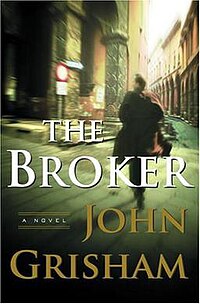
Book Review - The Broker

I’m relatively new to Grisham’s work, but even I could tell that his book, The Broker, was not up to his standards. The story follows Joel Backman, a high-powered broker who gets himself into a lot of trouble and is sent to a federal prison to be kept in solitary confinement. What that trouble is exactly we don’t find out until about halfway through the book. When we are first introduced to Backman, he is described in such terms that make you glad he got caught. Surely, he is the bad guy in the book, right? As events unfold so painfully slowly, I thought perhaps that Backman would turn out not to be too bad and perhaps he was framed or something. Nope. He did everything and got everything he deserved. But yet by the end of the book, I got that feeling that I was supposed to like him, despite being the sleazeball that he is/was.

The story is set in Italy where the U.S. government has decided to hide Backman until they deem an appropriate time to leak his whereabouts to foreign nations in order to see who kills him first. I thought perhaps this was going to turn into a story of how Backman kept having to hide from either the U.S. government or foreign governments. Instead, way too much of the book is spent on Backman learning Italian or eating some lovely Italian delicacy or visiting some wonderful Italian architecture. The pace does pick up when the time actually comes for Backman to run, but even that doesn’t make up for the rest of the book. The professional, government-paid assassins sent to whack him are seemingly a side note, even though the whole premise of the book is that Backman is hiding from them and is supposed to be on the run.

It’s evident, as Grisham points out in his author’s note, that he greatly admires the Italian culture. I’m sure quite a bit of research went into describing the various Italian cultural tidbits. But reading how to greet one another in Italian over and over again is not the stuff a person usually wants to read in a Grisham book. Overall, it was slow and disappointing.

Thursday, April 30, 2009

Book Review - Bible Doctrine

In Bible Doctrine, a condensed version of his longer Systematic Theology, Wayne Grudem provides an excellent resource for study groups, Sunday School classes or individual study. When I first purchased this book to use in teaching a youth Sunday School class, I was a little hesitant as most Bible doctrine books I had seen either oversimplified things or was so difficult to understand it made teaching from it almost impossible. However, Grudem’s writing style here was simple and quite easy to understand, yet at the same time did not sacrifice key elements of doctrine in order to obtain that simplicity.

Grudem covers what he views as seven key topics of Christianity: The Doctrines of the Word of God, God, Man, Christ and the Holy Spirit, Application of Redemption, the Church, and the Future. Each is divided up into several chapters that read very much like a class outline. There are review questions, application questions, special terms and Scripture memory passages at the end of each chapter.

What I especially appreciate about Grudem is the way in which he presents varying viewpoints on issues that have presented some disagreement. Because this book seems designed for classroom use, space does not allow him to dive into all the nuances of each argument, yet he still manages to present most, if not all sides quite fairly, presenting Scriptural arguments used to support each. While he divulges which view he holds to, he does it in such a way as to encourage the reader to further study the issue and decide for himself.

For example, while discussing the topic of Creation under the Doctrine of God, he briefly touches on the fact that many evangelicals disagree on the age of the earth. He presents arguments for both an old and a young earth, with Scriptural support and interpretation for each. His conclusion was that while “Scripture seems to be more easily understood to suggest (but not to require) a young earth view…. It should be said at this point that, with the information we now have, it is not at all easy to decide this question with certainty. The possibility must be left open that God has chosen not to give us enough information to come to a clear decision on this question and the real test of faithfulness to him may be the degree to which we can act charitably toward those who in good conscience and full belief in God’s Word hold to a different position on this matter.” (p.139)

It is with this wisdom that Grudem approaches many of the topics and one of the main reasons I would highly recommend this book, especially for beginners of theological study. It’s ease of use and understandability make it a valuable addition to any bookshelf.

Thursday, February 19, 2009

Book Review - Reviewing the Movies: A Christian Response to Contemporary Film

What movies should Christians watch? Is there a litmus test that can be applied to movies to determine the rightness or wrongness of certain movies? How does a Christian interact with “one of the most powerful cultural influences in America?”

In "Reviewing the Movies: A Christian Response to Contemporary Film," Peter Fraser and Vernon Edwin Neal tackle this issue head on in an attempt to help Christians understand both the methodologies and the worldviews portrayed in the theater. What the reader won’t find is a checklist of things to look for in determining whether or not he should watch this movie or that one. Instead of providing criteria that paints options either black or white, good or bad, the authors point to the heart of the matter – both the readers’ and the movies’ worldviews. They state that “the problem in America can be blamed in part on how we have been trained to think about ‘religious issues.’” They argue that instead of taking the easy road in compartmentalizing things like movies as either “Christian” or “non-Christian,” we should be actively engaging the culture, looking for truth to be portrayed whether that truth is pretty or not. Throughout the book, reviews and pictures of both classic and contemporary movies are offered as examples of excellent or poor worldviews as portrayed in the theater.

At the beginning of the book, the authors make some important points in the criteria often used by Christians in determining whether or not a movie is “good.” The criteria used is either requiring that the movie be made by a Christian, requiring that the subject matter be blatantly Christian, or that there are obvious symbols of Christianity within the movie. Each of these criteria has their own problems to deal with and the authors discuss each of them in turn, commenting on the double standards inherent with many movies that may indeed fit one or more of the criteria.

The authors’ main concerns in how we view movies are the movie’s quality of production and the movie’s “overall meaning and significance.” The bulk of the book revolves around dealing with these two issues. Subsequent chapters provide a better understanding of both the artistry of film production (why was this particular angle chosen, etc), and why certain thematic elements are included (such as the element of love, religion, children’s points of view, etc). The authors often seem to be tackling culture rather than movies, but considering that movies make up such a huge part of our current culture, this is no surprise and they shouldn’t be faulted for it. The book continuously brings the reader back to what the Bible says about truth, goodness, beauty, love and the gospel. And the authors make an excellent point in saying that “as Christians we needn’t blush at the immodesty of stating up front what we consider good. We should, in fact, do so gladly; after all it is part of our witness to the world.”

Perhaps a little lacking in this book is what the authors do indeed consider to be good in movies. Again, while a checklist of good and bad things certainly cannot nor should not be expected, I expected something a little less nebulous. It seemed that the majority of the book was spent analyzing poor methods for reviewing and selecting movies, but did not adequately follow that up with better methods. The closest thing I could find is where the authors state “Great films promote great things and tell great stories. They have a fundamental integrity, a truthfulness in the way they portray the deeds and the dreams of men and women created by our loving God.” However, that being said, this book is definitely a step in the right direction in understanding how Christians should view movies.

Friday, December 5, 2008

Book Review – In His Steps

Rarely have I come across a book that I am so torn over as to how to rate it. Usually a book will be obviously good or bad, making the ultimate conclusion in rating it a fairly easy process. While a good book may have some detractors, overall the good outweighs the bad, with the reverse also being true of bad books. However, I’m having a hard time making such a distinction in reviewing Charles Sheldon’s classic, In His Steps. There are many good things about the book, but there are also many not-so-good things.

The book centers primarily on a few members of the affluent First Church of Raymond in the late19th century who have been faced with the question of how Jesus would act if He were in their place. (In His Steps can be credited with the origin of the popularized question of “What would Jesus do?” or WWJD). A call is made for volunteers to ask the question, “What would Jesus do?” before making any decisions for one whole year. Among those who volunteer are the pastor, the local newspaper owner/editor, a gifted singer, a wealthy young woman, a writer, and an employee of the local railroad. The book follows their efforts during the course of the year as they attempt to live out their pledge of asking, “What would Jesus do?” This leads them to make decisions that aren’t the most popular or even understood by some family members and the general public. It also leads them to undertake a greater involvement in their city, both in evangelical outreaches and for the good of society in general.

For a book that was written over 100 years ago, it cuts to the heart of our current culture in the majority of the Western world of materialism and even more so among Christians. Perhaps the hardest hitting teaching comes towards the end of the book when the pastor asks a congregation, “How much is the Christianity of the age suffering for Him? Is it denying itself at the cost of ease, comfort, luxury, elegance of living? What does the age need more than personal sacrifice?....The Christianity that attempts to suffer by proxy is not the Christianity of Christ.” Here is found perhaps the main and best thrust of the entire book. The call to Christianity is a call to suffer for Christ. “If anyone would come after me, let him deny himself and take up his cross and follow me. For whoever would save his life will lose it, but whoever loses his life for my sake and the gospel’s will save it.” (Mark 8:34-35) The decision to follow Jesus, to do what He would do, is not played out in the characters’ lives as something that turns out rosy. One man loses his job and as a result, his wife becomes bitter toward him. The newspaper owner/editor watches his subscribers and advertisers leave in droves because of his decision not to allow certain kinds of content. Yet another turns down what some may consider the “opportunity of a lifetime” to serve in a more humble ministry. This is no health, wealth and prosperity gospel. Wearing a bracelet that says “WWJD?” simply won’t cut it. All through the book, the element of personal suffering and sacrifice is continually presented as the ultimate test of following Christ.

In His Steps gives an example of Christianity in action – how Christianity looks in the nitty-gritty, everyday stuff of life. The characters realize that Christianity is not simply an abstract idea, full of wise sayings and doctrines designed only to stimulate the intellect. Christianity is lived out Monday through Sunday. It’s not only making decisions based on what Jesus might do, but telling people the reasoning behind the decision. It’s getting involved in the community, reaching out to those in need, using the resources that we’ve been blessed with to help change a life. This is Christianity in action.

This brings me to the issues that have given me pause and not just a little concern. First, a few minor points. The writing style is very poor. Superlatives abound in the descriptions of the effects of various decisions. “For the first time ever…” or “he had never…” or “Nothing had ever…” or “Such a thing had never…” – these overused phrases become old and trite in their use. Additionally, the plot becomes rather predictable. However, that being said, this book is perhaps rarely read for its fictional and linguistic prowess.

While the characters in the narrative are seeking to follow Christ’s example, much of the decisions are based very much on personal interpretation with little to no Biblical basis for their reasoning. In one sense, the subjective nature of the question at hand makes the decision one that should be and can only be decided by the person ultimately responsible. In this, the author rightly puts great emphasis on prayer and the personal nature of the pledge. However, this lends somewhat of a relativistic mindset if the decision is not based on what Scripture says. For example, the newspaper editor decides that printing a Sunday edition is not what Jesus would do since Jesus would not publish something that caused a reader to read anything else but the Bible on Sunday. While to be commended for making such a difficult decision and following his conscious, this makes me wonder what in Scripture teaches such a notion that reading anything else but the Bible on Sunday is contrary to Christ’s teachings.

The biggest issue I have with the book is why the Christians go about seeking to follow Christ’s steps or do what Jesus would do. Set during the heyday of the Temperance Movement, much emphasis is placed on the poorer citizens of the city and the effect that alcohol played in many of the problems that class of society faced. Further, while there seems to be much emphasis on evangelization, the improvement of life in general for the class is seen as the ultimate end of this evangelization. Oddly enough, this message of “accept Christ and everything well get better” goes against the message for the upper class citizens that Christians must suffer. The gospel that is proclaimed in In His Steps is not a gospel that comes by means of the death, burial and resurrection of Christ. Instead, it is a gospel that points to Christ as the ultimate example of how to live and reform society, but not the source of the strength to bring about that reform. And Christ’s example in this case is to help the poor. Where a conflict arises is in dealing with the question, If helping the poor in bettering their society is what the gospel offers, how does this affect how the poor themselves live? This question is asked point blank of several of the pastors by a man out of work for many days and not one of them can provide an answer. One pastor ponders the question in his heart as

“a question that brings up the entire social problem in all its perplexing entanglement of human wrongs and its present condition contrary to every desire of God for a human being's welfare. Is there any condition more awful than for a man in good health, able and eager to work, with no means of honest livelihood unless he does work, actually unable to get anything to do, and driven to one of three things: begging or charity at the hands of friends or strangers, suicide or starvation?”

Nowhere in the book is a person’s sinful condition addressed, but only the social condition. When reform comes, it should not, it cannot come through the betterment of a person’s economic wellbeing. I’m not denying that we have a responsibility to minister to others, especially those in need. I think even my own tendency is to try to ignore others’ condition, like the condition of the man on the corner holding the sign. But in helping those in need, we should not do it simply for the sake of our own suffering nor in trying to help them make a better life for themselves. We should be pointing them to Christ, not as the example of who we are following, but as the source of the strength to do what we do, the source of the righteousness to overcome sin. Without Christ, without repentance, we can improve society to the last person but will not change the root of the problem and will find them just as bad as before. As John Owen so aptly puts it in The Mortification of Sin: “Poor soul! It is not thy sore finger but thy hectic fever that thou art to apply thyself to the consideration of. Thou settest thyself against a particular sin, and dost not consider that thou art nothing but sin.”

In His Steps is certainly a step in the right direction of encouraging believers to challenge the way we live and think and interact with the world around us. But the reader should always keep in mind that the gospel of Christ is not an example simply to be followed in order to better society, but rather the gospel is solely and completely about Christ Himself and the righteousness we have in Him. In following Him, a person’s social standing may not improve in the slightest, but his eternal standing in the sight of God will. And that’s what matters.

Thursday, June 5, 2008

Book Review: God At Work

In evangelical Christian circles, you might often hear the encouragement to “do everything to the glory of God,” an exhortation taken from 1 Cor. 10:31. But just what this means or how this is to be done more often than not goes unsaid and ends up coming across as a meaningless platitude. While Christians should indeed pursue the glory of God in everything they do, how to go about doing this can sometimes remain a mystery.

In God At Work, Gene Edward Veith seeks to help Christians in understanding what has been called the doctrine of vocation, crediting much of his writing to Gustaf Wingren who in turn wrote on Martin Luther’s stance on the doctrine. It would be safe to say that this book is largely about how Christians interact with their culture and how indeed Christians find the presence of God in the ordinary, everyday activities of life.

For example, when we ask God to “give us this day our daily bread,” Veith writes sensibly that in meeting this provision, God does not simply rain down bread from heaven, although this certainly isn’t impossible as was shown during the Israelites’ journey from Egypt. Rather, God provides our needs by the hand of the farmer who grows the wheat, the baker who put this and other ingredients together to make the bread, and the many other people involved in the process. Or when we are sick and pray for healing, while God may indeed choose to miraculously heal us without any human intervention, the more common method is using the knowledge of physicians to diagnose and treat the illness.

Vocation then, according to Veith, is seeing how we and those around us interact with one another through roles God has placed us in and how God is honored when we do so. Veith rightly and quickly points out that while our relationship to God is not based on how we live out our vocation, our relationship to our neighbors is. He quotes Gustaf Wingren in saying “God does not need our good works, but our neighbor does.”

Chapters discuss how a person goes about determining what his or her vocation is, how we are to live within the vocations we have been given, and what certain vocations look like, namely in the family, in the citizenry and in the church. Veith provides an excellent discussion on how Christians interact with the culture around them in each of these areas, bringing it back to showing just how this does indeed bring glory to God.

Two areas are worth mentioning in detail, one good and one not so good. First, Veith excellently points out that the work that a Christian does most often will not look any different than the same kind of work a non-Christian does. As he puts it, “There is no distinctly Christian way of being a carpenter or an actor or a musician. Christian and non-Christian factory workers, farmers, lawyers, and bankers do pretty much the same thing.” The key to recognizing the difference between the Christian’s and the non-Christian’s vocation is that “Spiritually the Christian’s life is hidden with Christ in God” and that “just doing our jobs” is found in “ordinary men and women expressing their love and service to their neighbor.”

The not-so-good detail is that in one section of the book, Veith argues that our vocations are not our choice and are out of control, yet later seems to imply just the opposite. I can understand that our backgrounds and capabilities (physical, mental, etc) control our options as well as the desires of others (in other words, I can’t marry a girl who wants nothing to do with me!). The problem is that he then carries this forward to an illogical and incorrect assumption that ALL choices are outside of our control.

This last point aside, however, this is a great book for providing a framework in viewing how we as Christians interact with the world around us. Veith aptly points out that we are not called to be Christians who sit in a monastery, isolating ourselves from the world, but that it is our responsibility to reach out and serve those around us.

Wednesday, May 28, 2008

Book Review: Love That Lasts

Most books I’ve read by Christian authors on love, romance and marriage fall into one of two categories. There are those books that are heavy on psychoanalysis with a dozen warm and fuzzy illustrations to get the few common sense points across. Unfortunately, these rely more on the illustrations than on Scriptural support, if any. These books are usually easy and perhaps quite fun to read, but in the end don’t tell you anything you already didn’t know or leave you wondering if its advice has any foundation in the Bible. The second category of marriage books goes to the other extreme of turning the book into a theological dissertation that leaves the reader finishing the book and wondering what the author said. The idiom “too heavenly minded to be of any earthly good” aptly describes these tomes.

Call me cynical, but when Love That Lasts: When Marriage Meets Grace by Gary and Betsy Ricucci was recommended to my Bible study group, I didn’t have my expectations too high in what the book would have to say. I definitely wanted something different, something that didn’t fall into the above mentioned categories, but didn’t expect it. As soon as we started reading the book, however, I knew that this book was indeed different. The further we got into the book, the more this fact was solidified. Right from the start, it was evident that, while there were certainly plenty of illustrations, the bulk of the book was solidly based on Scripture, but not in a way that made it read like a theological treatise. As author Jerry Bridges puts it in his recommendation on the back of the book, “Love That Lasts is thoroughly biblical, very practical, and quite convicting.” There is one small note worth mentioning in the preface. The authors point out that this book is actually an updated edition of an earlier 1992 printing. The original subtitle was “Making a Magnificent Marriage,” which as the authors point out was “certainly a worthwhile goal, [but] seemed to put the emphasis on human effort, for human ends. The new subtitle, ‘When Marriage Meets Grace,’ reminds us that it is God and his glorious power revealed in the gospel of Jesus Christ that are the beginning, the means, and the goal of marriage.” This change in subtitles points the direction in which the authors are headed and right from the start reveals that this book was indeed different.

The Ricuccis start off by asking some very good questions in how a marriage is defined Biblically. The importance of laying this groundwork is essential in what would follow in the rest of the book. Without this basis, the rest of the book and the teaching of God’s grace in marriage goes out the window. Questions such as “Does your marriage find its purpose primarily in God?” and “Does your marriage find its hope in the gospel of grace?” immediately puts marriage in light of the gospel. While this may sound similar to what other theological marriage books say, the difference is that the Ricuccis don’t stop at talking about the nebulous and abstract ideas, but take it right down to where the rubber meets the road. For example, consider the following points made in discussing the second question:
-“Because of the gospel, Christians have become new creations (2 Cor. 5:17). Therefore, in our marriage, our past does not define us, confine us, or determine our future.”
-“Because of the gospel, we are accepted by God (Romans 15:7). Therefore we are not dependent on a spouse for who we are or what we need.”
-“Because of the gospel, we have hope (Romans 5:1-4). Therefore we can endure any marital difficulty, hardship or suffering with the assurance that God is working all to our greatest good (Romans 8:28)”

Each of these points brings the gospel into everyday life and shows how it should affect a marriage. They conclude this section by saying “Nothing is more essential to a marriage, and nothing brings more hope, than applying the gospel of Jesus Christ.” With these words, the authors are ready to launch into other areas of marriage more commonly thought of when marriage books are considered.

Gary and Betsy each write a chapter directly to either husbands or wives regarding the roles that each bring to a God-honoring marriage. Gary talks about the responsibility of the husband to lead and love his wife in the same manner that Christ leads and loves the church. Here they both do an excellent job of pointing out that while there are differences in roles, these differences in no way imply superiority or inferiority on either the husband’s or the wife’s part. This distinction is made while at the same time affirming the biblical concept of leadership on the husband’s part and submission on the wife’s part. You’ll have to read the book yourself to discover just how they do this!

Three chapters are devoted to the ever-important subject of communication, including what the goal of our communication in marriage should be (intimacy), how husbands and wives communicate differently, what hindrances there can be in developing intimacy, and how to restore intimacy in times of conflict. All of these are wrapped firmly in the cloak of the gospel and how it applies to what our marriages look like. Expect these three chapters to be convicting and to get your toes stepped on!

The last two chapters cover the parts that I’m sure many people turn to first – romance and sex. (I admit it, I skimmed these sections first!) Here, too, the authors bring the topic right back to how our marriage is to be built on Christ, reminding us that God “isn’t just interested in love. He is love (1 John 4:16).” After discussing the “why” of romance, the authors offer some very practical suggestions for the “how” of romance, such as being creative, giving little gestures, and offering spontaneous surprises, having date nights or weekend getaways, and many others. The chapter on sex is candid and includes a section for husbands and a section for wives, both discussing the importance of communication and frank openness that can lead to greater sexual intimacy. As with all the other chapters, this chapter ends by asking “In what area must I improve? Where do I need to grow in order to serve my spouse more effectively…”

What we found especially helpful was the included study guide at the end of the book. Most study guides simply point you to the chapter to find the answer printed somewhere in the text and doesn’t take much thought. These questions, however, while pointing back to the chapters, are more pointed and designed for some serious discussion on how the reader views such and such an issue, or what views the reader had that might agree or disagree with the authors and why. Again, these questions aren’t ones that can be simply answered then forgotten in order to move on to the next one. Questions such as “Ask your wife or fiancĂ©e if any person, activity or possession, at any time, seems more important to you than her,” while they may be difficult to ask and even harder to answer, are designed to put into action what the authors write about.

A key point made near the end of the book summarizes the point Love That Lasts is trying to make: “God’s ultimate purpose for romance is the same as his purpose for marriage: to bring himself glory, to bring us blessing, and to demonstrate the remarkable relationship between Christ and the church.” The Ricuccis write in such a way as to make it crystal clear that their goal was not to simply help people have better marriages, but to have marriages that reflected God and the church. And instead of coming across as either being a psychologist or by being preachy, they write as if they were an older couple mentoring a younger couple, complete with their own flaws readily acknowledged, but ready to help you and your spouse to keep growing in your relationship with each other.

Friday, November 23, 2007

Book Review - Wild At Heart

In the past couple of months, I’ve gotten into listening to books on CD on my way to and from work. I figured that since I’ve got a 20 minute or so drive, I might as well use the time to listen to books. I’ve also discovered a great online source for audio books at www.christianaudio.com where they have a free book available for download every month. I’ve downloaded a couple and need to burn them onto a CD so I can listen to them.

While we were visiting my sister, her husband Doug lent me the audio version of John Eldredge’s Wild at Heart. Having just finished it, I thought I would share a review of the book. Again, thanks to Doug for lending me this book. I’ll mail it back to you shortly!

To be honest, I was a little disappointed although I’m not sure exactly what I was expecting. From the very beginning, Eldredge seems to be painting a caricature of what a true “man” that comes hauntingly close to how Hollywood wants us to view men as – rugged, square-jawed, outdoorsy types that live to clock out at 5 and have their trucks in 4-wheel drive by 5:15 on some backwoods trail. In fact, many of Eldredge’s examples of “true” men come from such movies as Braveheart and Gladiator. It is apparent that Eldredge enjoys the outdoors and who can fault him for that? The danger is when he equates a necessity of enjoying all these things to how much of a “wild man” a guy really is. He even goes so far as to say that a true man can’t really like being inside at a desk all day, but should be longing to get outside. If he does, something’s wrong with him and he needs to reclaim his manhood by getting wild (outdoors). And this is the premise that Eldredge seems to base his entire thesis on – a man must be wild, adventuresome and ready for a fight in order to be a man. This is backed up with many examples including one where he advises his son who is being picked on to punch the bully in the face as hard as he can. This apparently was designed to make his son feel enabled and manly and have the freedom to fight back, despite the fact that we are to follow Christ’s teaching of turning the other cheek. (Eldredge defends his actions by saying many in the church misinterpret this passage, but never says how or why.)

There are two particular errors (among many) in the book that I want to hit on. The first is the noticeable absence of hardly any Scripture given to support Eldredge’s many false presumptions, and the Scripture that is quoted is so twisted out of context as to make it say something that does not ring true. Instead, Eldredge relies heavily on psychological analyses that fall short of correctly mirroring any Scriptural teaching. Don’t get me wrong on this point. I believe that there is a great use for psychology and we shouldn’t throw the baby out with the bathwater so to speak. But the danger comes when we replace Scripture with the psychology and try to make it sound Biblical.

The second and perhaps most disturbing error in the book is Eldredge’s claim that, in trying to support his view that God loves adventure, God is a risk-taker and even an “immense risk-taker.” To hear Eldredge’s view of the death of Christ, you would think the crucifixion was completely unplanned and God showed up just in the nick of time to set everything straight. “God lets the mob kill Jesus, bury him…then he shows up.” Although he tries to add a disclaimer that he isn’t a proponent of Open Theism, he apes Open Theism’s teachings quite well. Risk by definition involves some aspect of the unknown and to say that God takes risks is to say that He doesn’t know the outcome of certain things.

I do believe that today’s culture emasculates men in wanting to be in touch with their softer side and perhaps Eldredge was trying to fight against that. But instead what he ends up doing is going to the other end of the Hollywood extreme in idolizing he-men. In the end, Eldredge’s answer to regaining masculinity seems to be to get in touch with our inner caveman. While there were a few good points made, they are so few and far between as to not make reading (or listening to) the book worthwhile. If I were to rate it out of 5, it would be a 1.

Monday, August 7, 2006

Another day, another blog

This week marks the return of the auditor!! [insert creepy music here] Part of my responsibilities at the newspaper is being the point person for our annual circulation audit. This is my first time going through an audit in this position and seeing as I’ve only been in this position about 2 months, I’m a little nervous. But so far so good, which means the worst is yet to come. I’ll just be glad when it’s over.

Okay, book review time again. Late last year, I picked up Ted Dekker’s Black, book one of the Circle Trilogy. Suffice it to say that I was hooked and had completed Black in about a 48-hour time frame. I was given the other two, Red and White, for Christmas and made short work of them. I highly recommend these books to pretty much everyone.

So recently, I picked up another one of Dekker’s books called Showdown. [Warning!! Possible spoilers ahead, but I’ll try to keep them at a minimum.] It was a good read, albeit definitely not as good as the Circle Trilogy. Dekker has a pretty good grasp on the art of allegory, in my non-professional opinion. In Showdown, you have the classic struggle of good versus evil, but Dekker has a way of mixing it up a little bit. The story centers around two locations mysteriously interwoven– a town called Paradise (oddly enough) and a monastery in the mountains where a special project has been under way for the past 12 or so years. Half-way through the book, Dekker introduces a key element that anyone who has read the Circle Trilogy will recognize immediately. (As a side note, if you’ve not read the Circle Trilogy, read them before you read Showdown.) In the end, there is an allegorical element of redemption and a very stirring portrayal of just a tiny bit of the agony that must have ripped the heavens when God willingly sacrificed his Son, Jesus.

The other main take-away from this book that I had was the graphic depiction of the blackness of the sin nature. As the actions and thoughts of the townspeople rapidly degenerate, through the first half of the book it appears that they really have no control over what they do, but are seemingly under the power of a hallucinogen. However, it is later revealed that while there is some outside influence, all the choices made by the townspeople (even down to the seemingly untouchable minister!) are completely their own, and almost without exception everyone chooses the wrong, all the while thinking they have been “freed.” That’s a pretty good description of the sin nature, in my opinion.

Overall, it was a pretty good read.

Thursday, August 3, 2006

Here we go!!

Since I’m relatively new to this whole blogging thing, I don’t guarantee anything exciting, earth-shattering or deeply philosophical. Every now and then I might have a book review or share a news article or whatever. And even if nobody’s reading this, it won’t be the first time I’ve talked to myself. So here goes.

While getting ready for work this morning, I noticed it was unusually warmer than it should have been in the house considering the A/C had been running. I felt the vent and sure enough, there was lukewarm air coming out. Not exactly what you want to find out during the hottest part of the summer. Fortunately, we were able to have a repairman come that afternoon and fix it. Sarah and the boys breathed a sigh of relief for that one!

All this week, our church has been having VBS. Sarah is teaching a class and Carlos is going as well. Both seem to enjoy it, but Sarah is definitely looking forward to the end of the week. Believe me, so am I! It’s just been Jeremiah and me in the evenings since Sunday. Although this has been a pretty good father/son bonding time. Not quite sure what he thinks about it all, but he seems to enjoy having his daddy all to himself!

I’ve just recently finished two books – one fiction and one non-fiction. (Yes, I have the bad habit of reading more than one book at a time.) The non-fiction book was Surprised By Joy by C. S. Lewis, and I must say I came away rather disappointed. I’ve heard a lot that Lewis is a great writer, interesting to read, etc., ad nausem, so I purchased two volumes containing eight of his books. I finished Pilgrim’s Regress a few months ago and actually enjoyed that one. Surprised By Joy on the other hand was rather difficult to wade through. Lewis has (and even admits in one book) a rather bad habit of assuming the reader knows exactly what Lewis is talking about, whether the subject be French, Latin, philosophy, or Norse mythology. All through the book, he is trying to convey his lifelong search for Joy by chronicling his journey through philosophies in an autobiographical sort of way. On the one hand, you could almost throw out the entire book except for the last two chapters and still get the idea. On the other, however, I wonder if the point would be made if Lewis hadn’t wrote about all the other worldviews he went through to arrive at Christianity.

Lewis very rightly states “There was no doubt that Joy was a desire….But a desire is turned not to itself but to its object. Not only that, but it owes all its character to its object.” Our joy as Christians should be found or rather culminated in God, and to seek after God is to seek Joy itself! Yet even though Lewis hints at this, he doesn’t really directly make this point entirely clear, even in his closing paragraph where he states: “But what, in conclusion, of Joy? For that after all, is what the story has mainly been about. To tell you the truth, the subject has lost nearly all interest for me since I became a Christian…. [Joy] was valuable only as a pointer to something other and outer.” Overall, he seems obsessed not with defining Joy or how it relates us to God, but painstakingly detailing his intellectual pursuits. I would rate the book a 4 out of 10 and probably never read it again.

Wow, that was a long first blog! Hopefully if you’re still reading this, you haven’t fallen asleep. I’ll blog more later on the other book I read of one of my favorite authors, Ted Dekker.